Domain Reputation Test
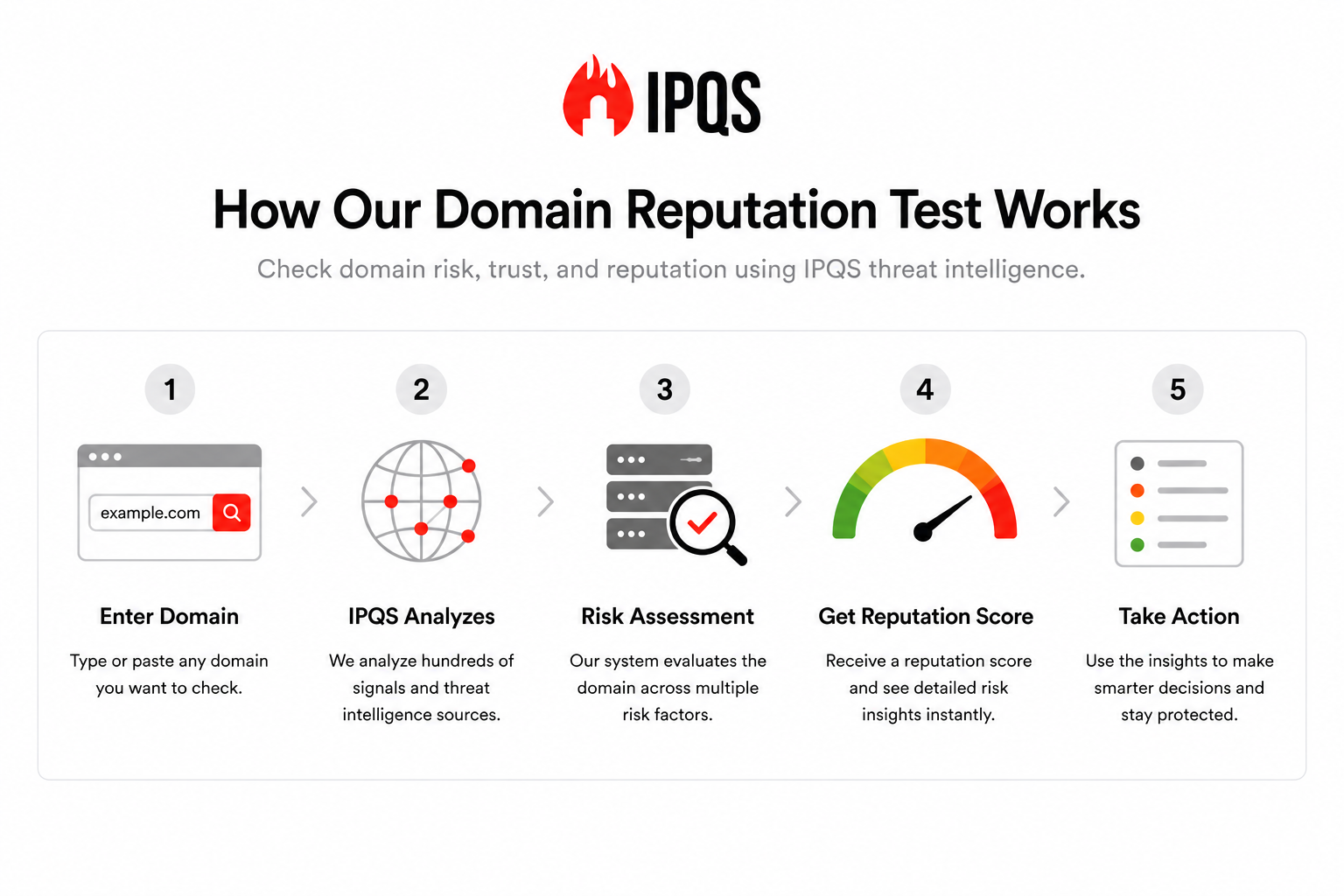
Quickly perform a domain reputation check to identify suspicious domains being used for abusive behavior. Examples include phishing, malware, spam, & disposable emails used for fake account creation, scaled bot attacks, chargebacks, and similar types of malicious behavior.
Trusted by thousands of companies

Common Warning Signs of High-Risk Domains
Not every newly created or unusual website is malicious, and individual signals alone rarely confirm abusive behavior. However, multiple risk indicators appearing together can sometimes suggest a greater likelihood of spam, phishing activity, or fraudulent behavior.
Recently Registered Domains
Fraudulent websites are often created quickly for short-term campaigns. New domains can be legitimate, but very recently registered websites may warrant additional verification when combined with other suspicious characteristics.
Frequent Infrastructure Changes
Repeated changes to hosting providers, nameservers, or DNS configurations can sometimes indicate attempts to avoid detection systems or maintain unstable infrastructure.
Unusual Redirect Behavior
Unexpected redirects, multiple forwarding chains, or destination changes may indicate deceptive behavior intended to hide a website's final destination.
Large Volumes of Similar Domains
Threat actors frequently register groups of related domains with similar naming structures, slight spelling variations, or patterns designed to imitate legitimate brands.
Historical Abuse Indicators
Previous associations with phishing campaigns, malware activity, spam operations, or suspicious behavior may increase the likelihood that additional risk is present.
Domain reputation systems generally evaluate multiple signals simultaneously rather than relying on a single indicator to assess risk.
How Businesses Use Domain Reputation Intelligence
Domain reputation analysis helps organizations identify potentially risky activity before it affects users, customers, or internal systems. Security teams often combine reputation signals with broader fraud prevention and cybersecurity strategies to make more informed decisions.
Detecting Phishing and Fake Websites
Fraudulent websites frequently imitate trusted businesses to collect credentials, payment information, or personal data. Domain reputation intelligence can help identify suspicious characteristics that may indicate elevated risk.
Preventing Fraudulent Account Registrations
Many platforms evaluate domains associated with email addresses during account creation. Disposable or high-risk domains may sometimes indicate fake registrations, automated signups, or abusive activity.
Supporting Email and Spam Protection
Email security systems often analyze domain reputation signals to help identify spam campaigns, suspicious senders, and potentially harmful communications before they reach users.
Protecting Brands and Customers
Organizations may monitor domain activity to identify possible impersonation attempts, typo-squatting domains, or unauthorized use of brand-related terms.
Improving Fraud Detection Workflows
Domain reputation data can serve as an additional risk signal during transactions, account activity, or identity verification processes where suspicious behavior may require additional review.
Because reputation can change over time, many organizations rely on continuously updated threat intelligence and multiple data signals rather than a single indicator.
IPQS Domain Reputation Activity
Domain Reputation Lookup FAQs
Domain risk scoring detects suspicious domains that may be compromised or consistently used to facilitate fraudulent users & payments, disposable domains, or malware and phishing. Accurate domain reputation lookups can also be provided in real-time by using our malicious URL scanning API endpoint, which supports URLs or domains.
Learn more about domain reputation
Accurate domain reputation lookups tap into the largest honeypot threat network online maintained by IPQS, with over 5,000 active traps worldwide. Quickly detect new threats and the latest abuse patterns. Identify domains frequently used for SPAM and abusive behavior with an easy domain reputation score.