VPN Detection — IP Address Check
Free IP Address VPN Detection Test
Use this tool to perform a VPN detection test on any IP address. Look up any IP addresses that recently allowed VPN usage activity or functioned as a Virtual Private Network. This IP lookup tool can analyze a public IP address and compare the results against IP databases to spot VPN usage, a proxy IP address, or an anonymous proxy. 99.9% accuracy for testing VPN IP addresses.
Easily add real-time protection from proxies, TOR, and VPNs using our VPN detection API. VPN detection data is powered by the IPQS proxy detection service and an IP lookup tool designed to identify suspicious traffic patterns associated with online fraud and other cybersecurity threats.
Trusted by thousands of companies

Recent VPN Detection Tests
The following IP addresses had recent VPN detection checks.
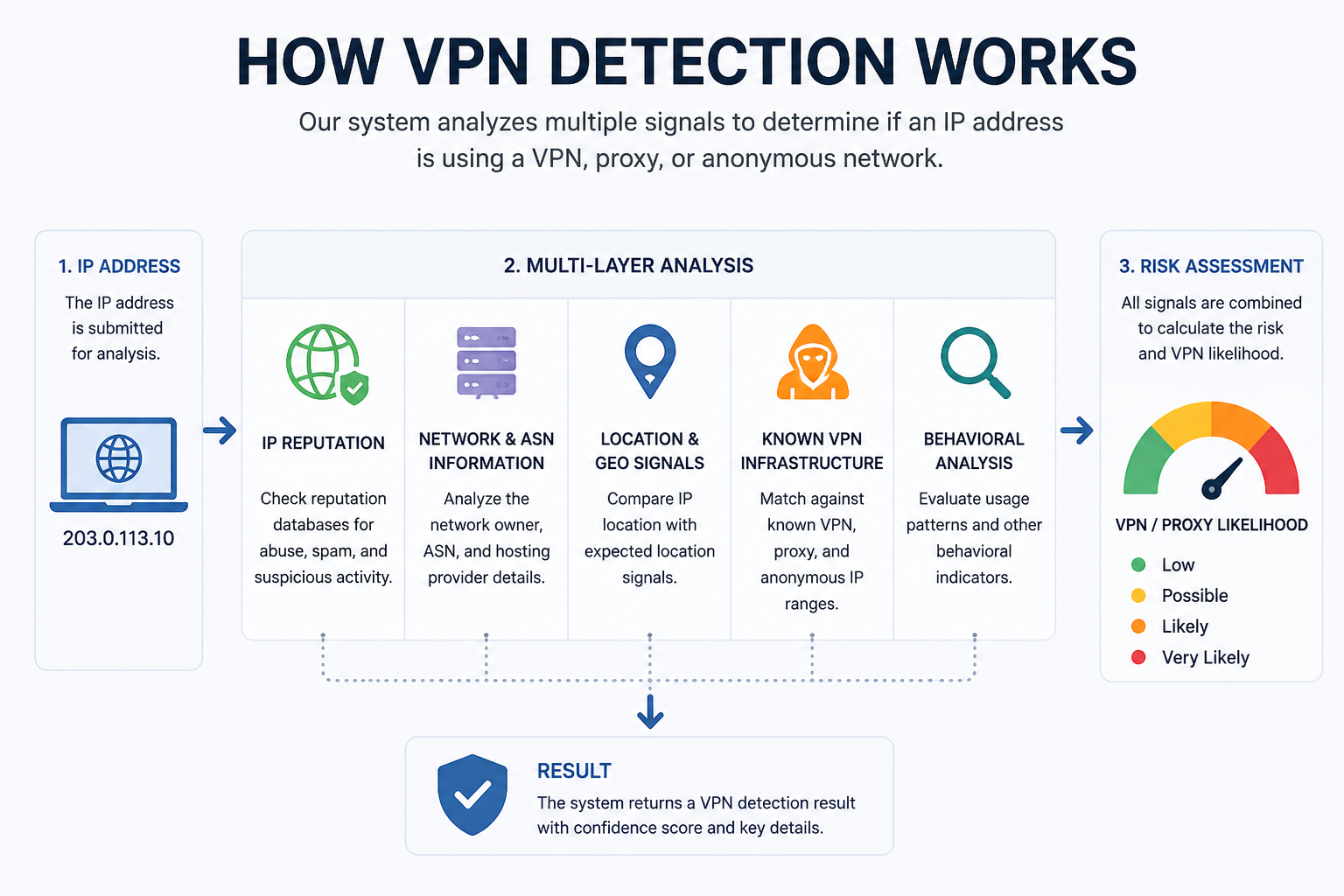
How VPN Detection Works
VPN detection systems evaluate multiple network and intelligence signals to determine whether an IP address may be associated with a Virtual Private Network, anonymous service, or proxy connection. Rather than relying on a single database or indicator, modern detection methods typically analyze multiple factors together to improve accuracy.
IP Reputation Analysis
Historical activity associated with an IP address can provide valuable context. Reputation systems may evaluate previous spam reports, suspicious behavior patterns, abuse activity, and other signals that help identify potentially risky infrastructure.
Network Ownership Signals
The organization or provider controlling an IP address can sometimes provide useful information. Certain network characteristics may indicate hosting environments or infrastructure commonly associated with VPN services.
Hosting and ASN Data
VPN services frequently operate through cloud hosting providers and data center infrastructure. Analyzing autonomous system numbers (ASNs), hosting details, and network patterns may help identify anonymous connections.
Known VPN Infrastructure
Detection systems may compare IP addresses against known VPN servers, exit nodes, and anonymous network infrastructure. Continuously updated intelligence can help identify newly observed services and changing networks.
Threat Intelligence Sources
Modern VPN detection often combines multiple intelligence sources, including reputation databases, network analysis, and global threat intelligence feeds to strengthen results.
Because VPN providers regularly add servers and update infrastructure, detection systems generally rely on continuously updated data and multiple signals working together rather than a single indicator.
How Businesses Use VPN Detection
Businesses frequently use VPN detection as part of broader fraud prevention, security, and traffic analysis workflows. While many VPN users rely on these services for legitimate privacy reasons, identifying anonymous connections can provide additional context when evaluating potentially risky activity.
Reducing Fraud During Account Creation
Fraudsters often use VPNs and anonymous networks to create multiple accounts while masking their real location and identity. VPN detection can help identify potentially suspicious registrations that may require additional review.
Protecting Account Security
Unexpected changes in connection behavior may sometimes indicate account compromise attempts or unauthorized access. VPN detection can provide an additional signal when evaluating login activity and account security events.
Preventing Promotional and Trial Abuse
Online services frequently offer promotions, discounts, and free trials that may be targeted by repeat abuse. Detecting anonymous connections can help identify attempts to create multiple accounts intended to bypass restrictions.
Monitoring Traffic Quality
Organizations often analyze connection patterns to better understand where website traffic originates. VPN detection may help identify unusual traffic behavior, anonymous connections, or activity that differs from expected usage patterns.
Supporting Risk Analysis Workflows
VPN detection can serve as one of several signals used during transactions, registrations, and user activity analysis. Many systems evaluate anonymous traffic alongside additional indicators rather than relying on a single factor.
Because VPN usage can be legitimate in many situations, detection systems typically provide supporting context rather than treating VPN traffic alone as evidence of malicious activity.
VPN Detection FAQs
Use the free VPN detection test above to check if an IP address is a VPN connection. Create a free account for API access and bulk IP lookups.
Learn more about VPN detection
Integrate the VPN detection API, understand VPNs, and protect your site from proxies and VPNs.
Integrate The VPN Detection API On Your Website
VPN IP addresses are just a small part of IP addresses that can cause problems for your business. The IPQS proxy detection API provides an easy way to detect all kinds of bad IP addresses, including Proxy, VPN, and Tor connections, as well as residential proxies and other high-risk services.
Did you know that VPN detection software can be added directly to your site? Simply upload a bulk IP address list or view the VPN detection API documentation to get started. You can also review a domain name, map its IP geolocation, and compare results with a geographical location check for added context.
IPQS VPN detection tools are accurate across all countries and include VPN server detection for IPv4 and IPv6 IP addresses. Confidently detect any VPN connection, including those from major providers like NordVPN, ProtonVPN, ExpressVPN, Private Internet Access, SurfShark, etc., while also screening residential proxies that may hide suspicious online activities.
VPN Detection API Coverage
The IPQS VPN detection API ensures enterprise-grade accuracy in identifying popular VPN providers and signatures associated with private VPN servers. This typically includes data centers, hosting providers, and similar infrastructure that can power a VPN connection. Similarly, the API can identify proxy servers, web proxies, and